|
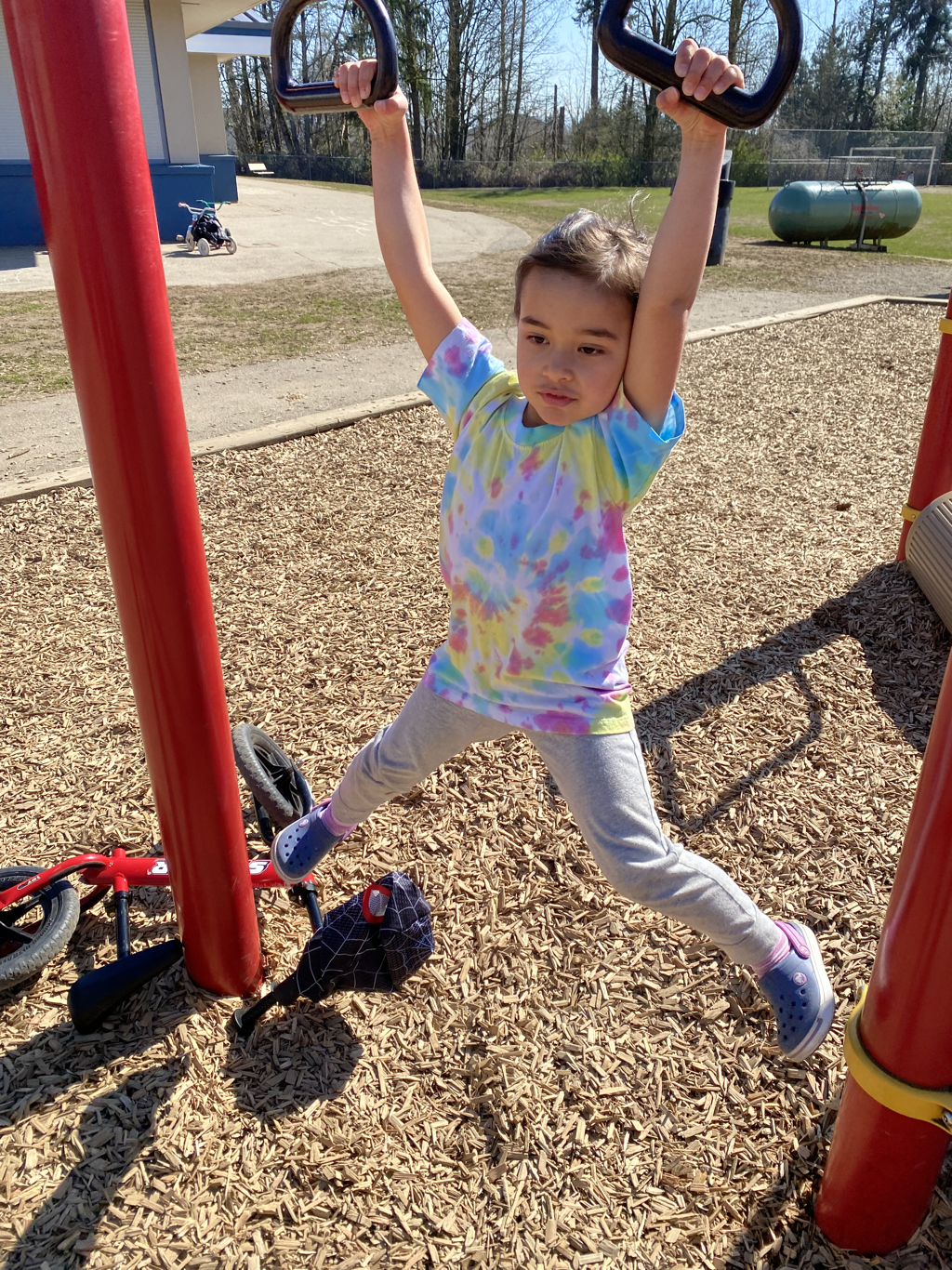
Even from our very young ages, we could choose to view our environment as our moral concern. Raising our awareness from noticing, thinking over, and pushing forward to taking our conscience into actions. In other words, with our roles as agents of change, each one of us takes our little part to take responsibilities of the situations we are currently living in.  We should take opportunities in our everyday moments, as learning experiences to lay the groundwork for a lifetime of environmental stewardship. During our recent encounter we notice how many thick cardboards have been inserted through the drain gaps. It certainly makes us wonder how it would be fine for the living habitat underneath. Being quick in their thinking, Isha stretches her arms to try to lift the cover up after our effort with a long stick is unsuccessful. Thinking together, George comes up with an idea of a rope to be tied around his bike, "Let's do it with our bike!" 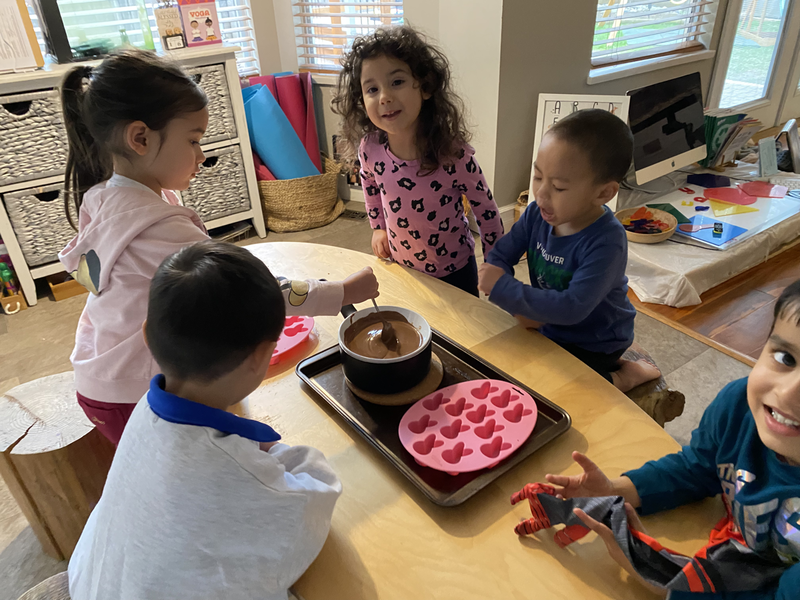 On the next day, we share our concerns to friends during our morning group discussion. We immediately take upon collecting our riding vehicles to come to the rescue! Within seconds, one by one takes initiatives upon arriving and checking it out. Without hesitation, putting hands around long ropes and tying knots on the vehicles take place. With so many "hmmph" and "urghh" being heard, we constantly think on our feet. The cheering support has been exchanged throughout to lift up our spirit and energy in putting our collaborative effort. Researchers have come to three important conclusions about environmental and conservation education: 1. Ecological awareness and knowledge are not enough to cause long-lasting behavior changes, but they can provide a basis or readiness for learning and participation. 2. Ownership (a personal connection with one or more natural areas, and knowledge of and/ or investment in problems/issues) is critical to responsible environmental behaviors. 3. Instruction and experiences intended to foster ownership and empowerment (a sense of being able to make changes and resolve important problems, and use critical issues investigation skills to do so) often permit individuals and groups to change their behavior. To have a meaningful environmental ethic, we must have a fundamental sense of affection for and identification with nature, and see ourselves as an integral, necessary member of the ecological community. So this time we revisit the question with some ready birds' food on hand.
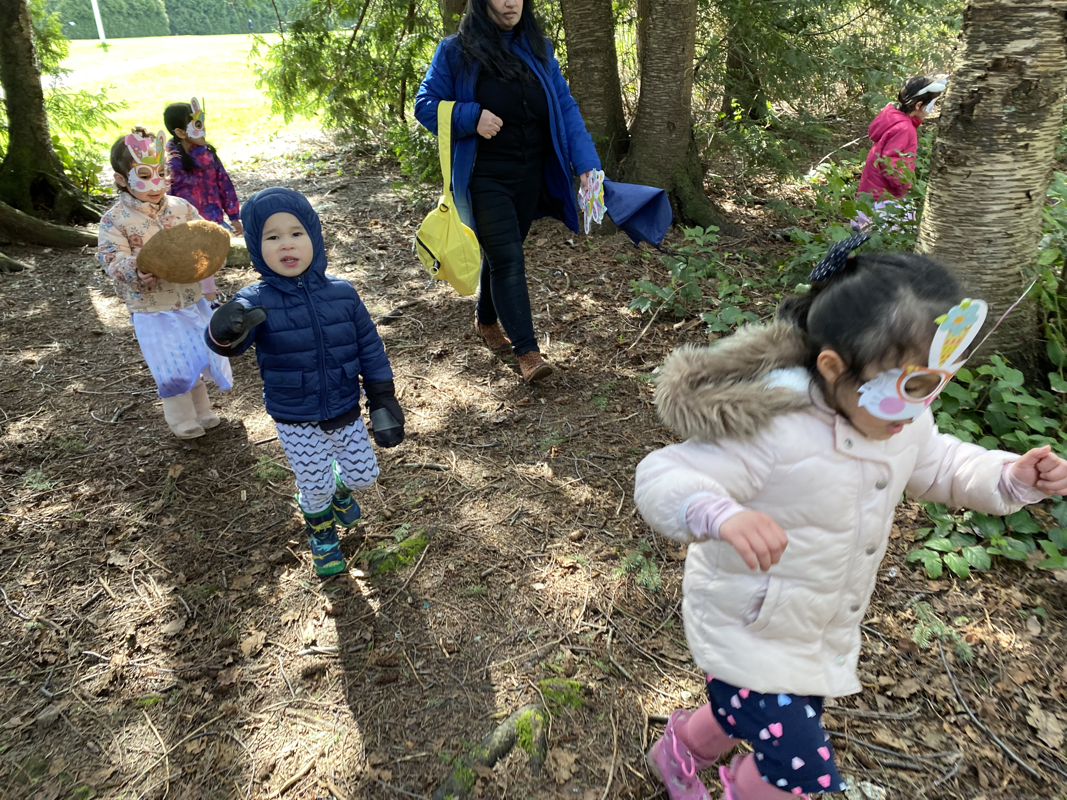
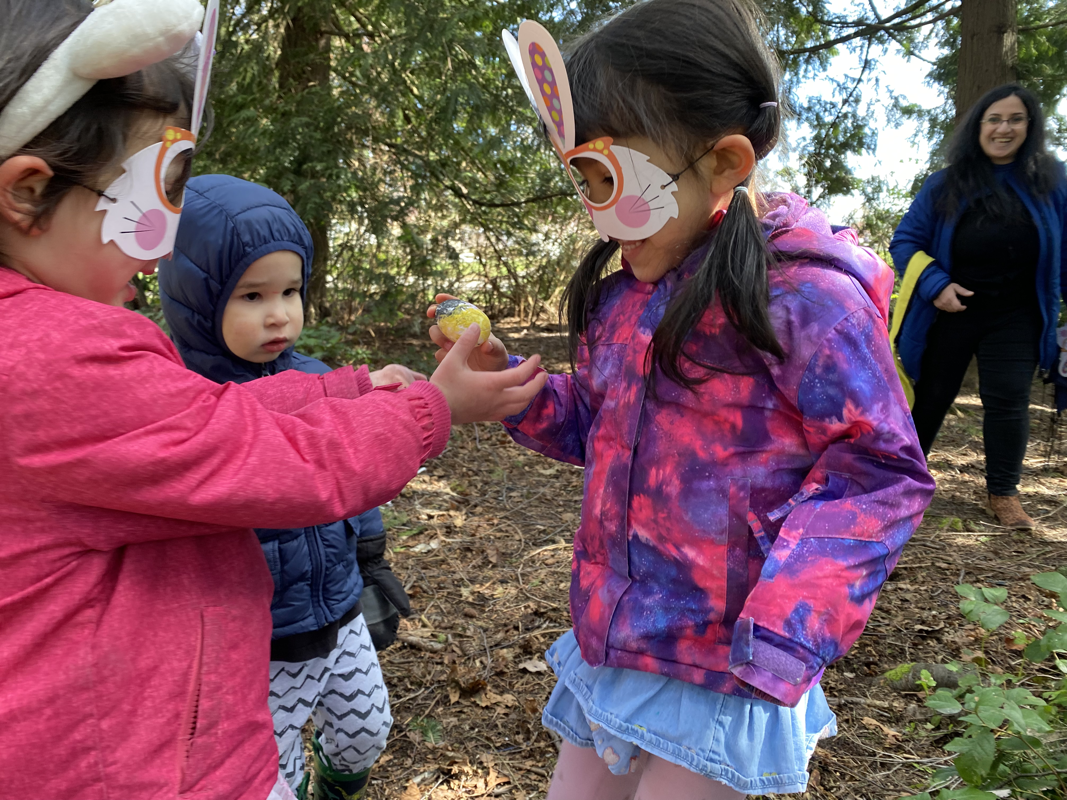
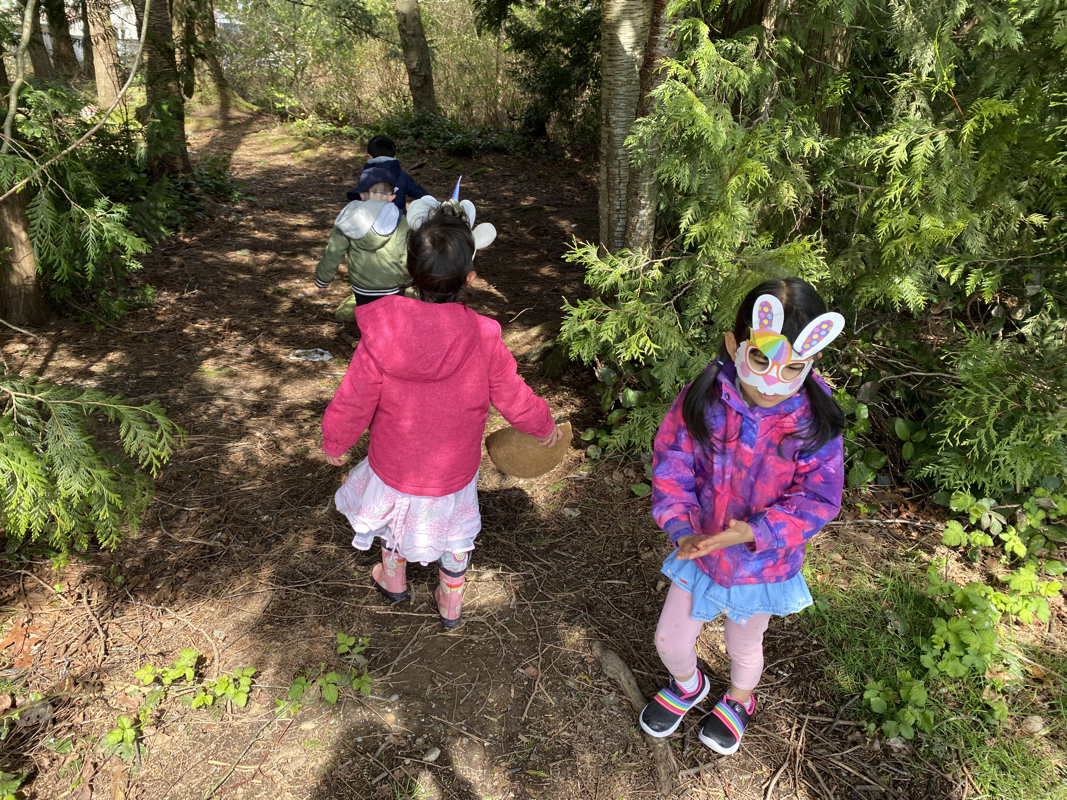
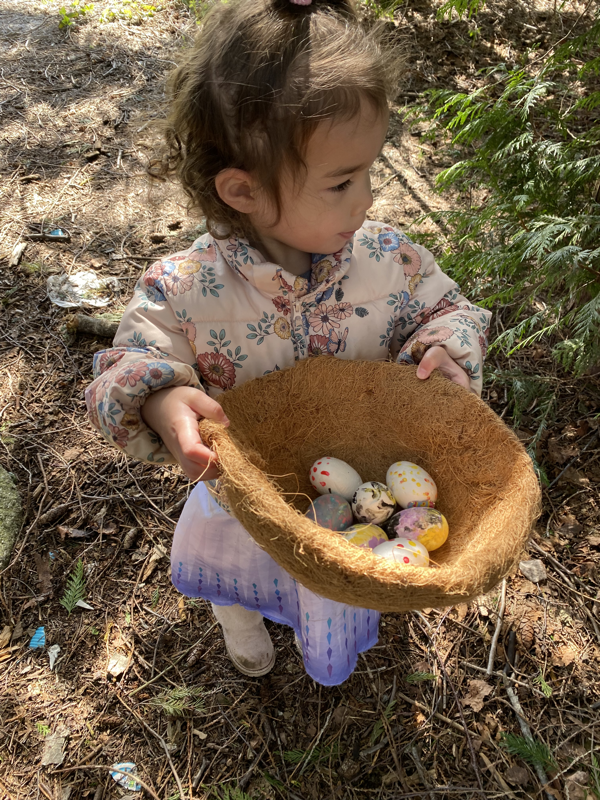
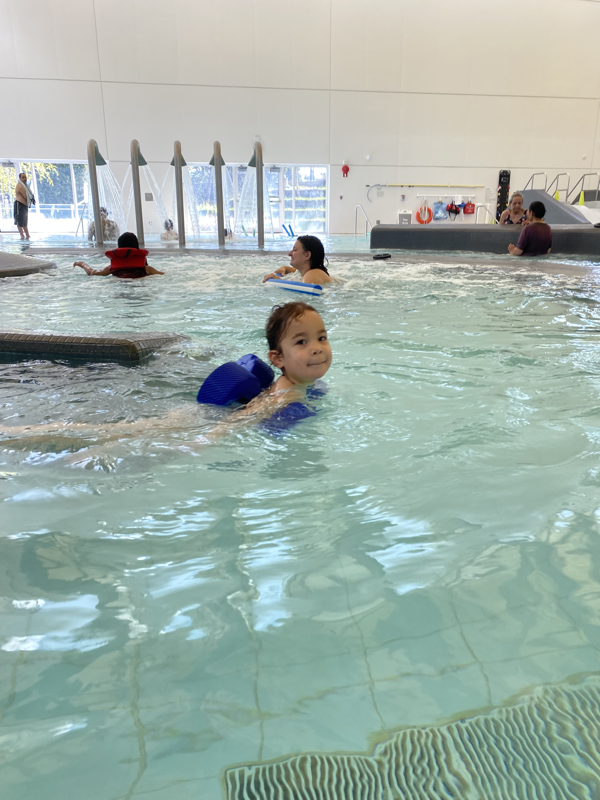
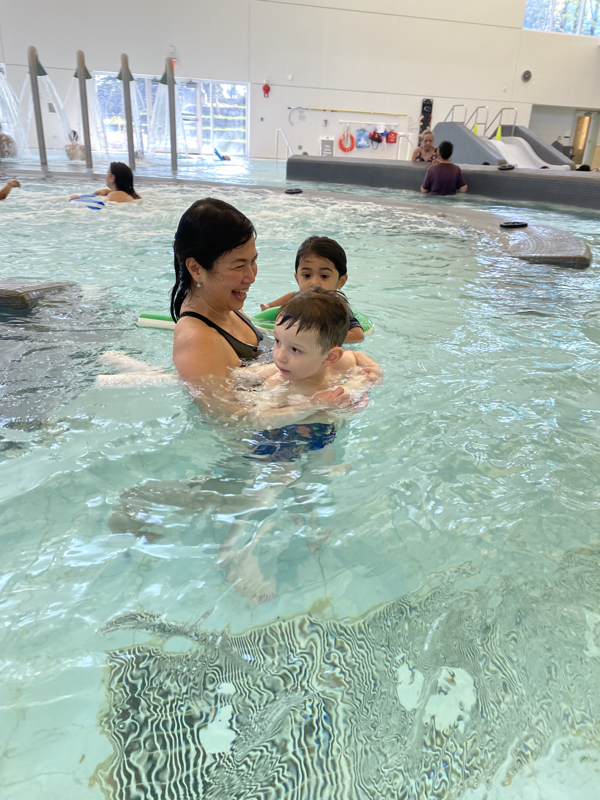
By scooping a handful of birds' food or cupping our hands to offer to the birds as expressions of being closer to the birds. In other words, this is another expression of us trying to be more courageous. After some effortful attempts to invite the birds to come around us, we propose to lay a sheet on a flat surface for some birds who may not visit any type of elevated feeder. We notice crows, for instance, like to peck food lying on the ground. Elie thinks differently for she observes some birds, like chickadees, usually feed in trees. It is indeed an important skill for us to gradually develop simple explanations of observations and complex interpretations in the world around us. "In that earliest childhood, we get those invisible glasses through which we look at the world all our lives, and these glasses color our views." - Lainscek, 2020. During our Easter Egg Hunt experience, we encounter more than 'just looking' at things or 'just seeing' things. Initially, we start observing using multiple senses simultaneously - sight, sound, smell, touch, and taste. Direct experiences lead to a higher increase and persistence of skills acquired by us as participants. Developing skills of observation can help us to 'catch sight of the beautiful' (Aked et al., 2008, p.8) and can give each of us unique 'invisible glasses' that 'color our world' so that we can be aware of and appreciate what is happening in the moment. What a blast day at the swimming pool! Splashing into the water, floating, treading water take place in various pool areas. Sharing our laughter and joy is indeed an immeasurable moment throughout Can't wait for the next one! 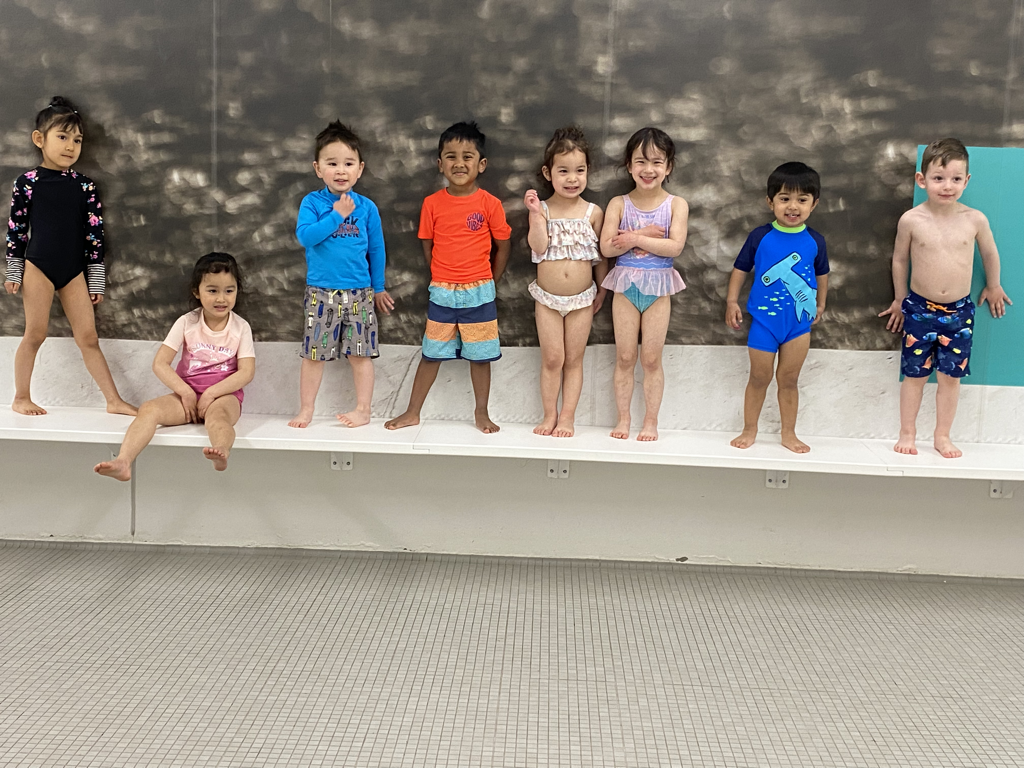 Kindest,
Children & Friends.
0 Comments
|